Articles & perspectives
Thoughtful writing on diplomacy, science and global affairs.
Considering the Small Modular Reactors to the Energy Future of Bangladesh
The July 21, 2026 fire at Excelerate Energy-managed floating LNG terminal off Maheshkhali was a reminder of how third-party interference and technical breakdowns can impact the Bangladesh energy security. Disruption of essential systems disrupted daily gas delivery of around 450 million cubic feet, hitting power plants, industries, industrialists and domestic users. The uproar was accompanied by uncertainty in international LNG markets which came as a result of tensions near the Strait of Hormuz which complicated the process of obtaining energy even further.
These changes highlight one of the long-running weaknesses of Bangladesh: how to provide stable sources of energy and sustain growing demand, dependence on imports in the global fuel prices and to control the financial effects of the price swings. They also give an interesting background to the appraisal of other sources of electricity that may supplement the current energy infrastructure in the nation.
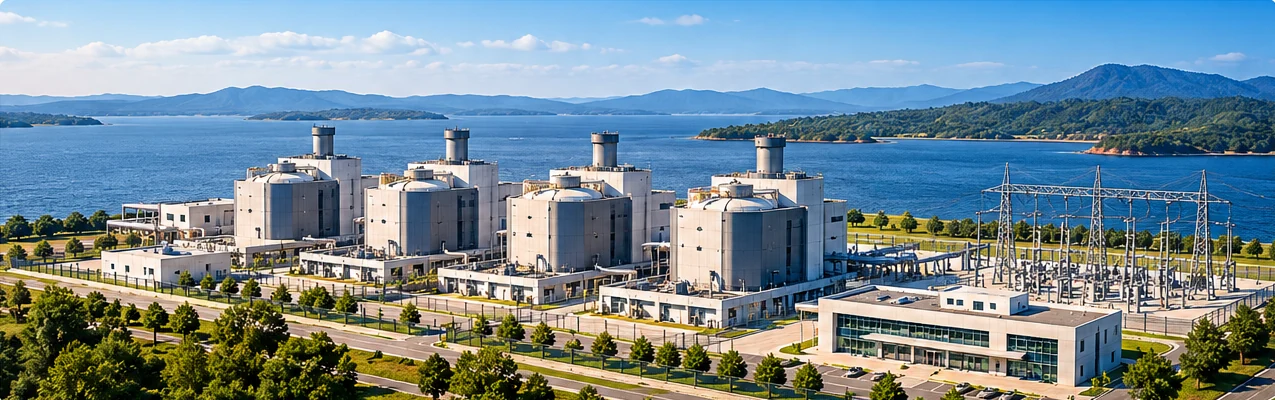
The possibility of deploying small modular reactors (SMRs) with capacities of around 300-400 megawatts has been taken into active cooperation of the Government. Rosatom Russia also made an offer of floating nuclear power unit to Bangladesh at a conference in Moscow in June. Such developments imply that the nation is starting to check how nuclear technology can help it in the longer-term energy diversification.
Potential of SMRs are not completely novel to Bangladesh. I got opportunity to attend the International Atomic Energy Agency (IAEA) 17th INPRO Dialogue Forum on Small Modular Reactors in Ulsan, South Korea, in July 2019. The international experts discussions revealed potential uses in countries with comparatively modest electricity grids and desired opportunities and challenges of financing, regulation, safety and technological preparedness. Most of those considerations have become all the more relevant to Bangladesh seven years later.
The share of natural gas in the electricity production in Bangladesh is around 64 percent and the decreasing domestic production has raised the value of the imported LNG. In 2025, the imports made in the country were about 327.8 billion cubic feet of LNG at the reported cost of about 3.8 billion dollars. The growth in renewable energy is increasing, but its proportion to the total electricity production is rather low.
The Rooppur Nuclear Power Plant is a significant step towards these structural challenges. Two VVER-1200 reactors with a total generation capacity of 2400 MW are expected to make a significant addition to the electricity generation in the country, when fully commissioned. The attempt to have a grid connection within the first unit is also stressed in recent discussions between Bangladesh and Rosatom. Another point that Rooppur considers to be necessary is the connection between the single generating units and the ability of the national electricity grid.
An individual 1,200 MW reactor is a high concentration of generation capacity. The highest electricity demand was registered to 16,604 MW in Bangladesh on May 10, 2025. With seven percent of the demand, that would be a single Rooppur unit at that level. In times of less demand, it would have a much higher relative share.
Preview · Continue reading for the full article
Continue reading →